A unified fieldwork platform for high pressure, low connectivity environments
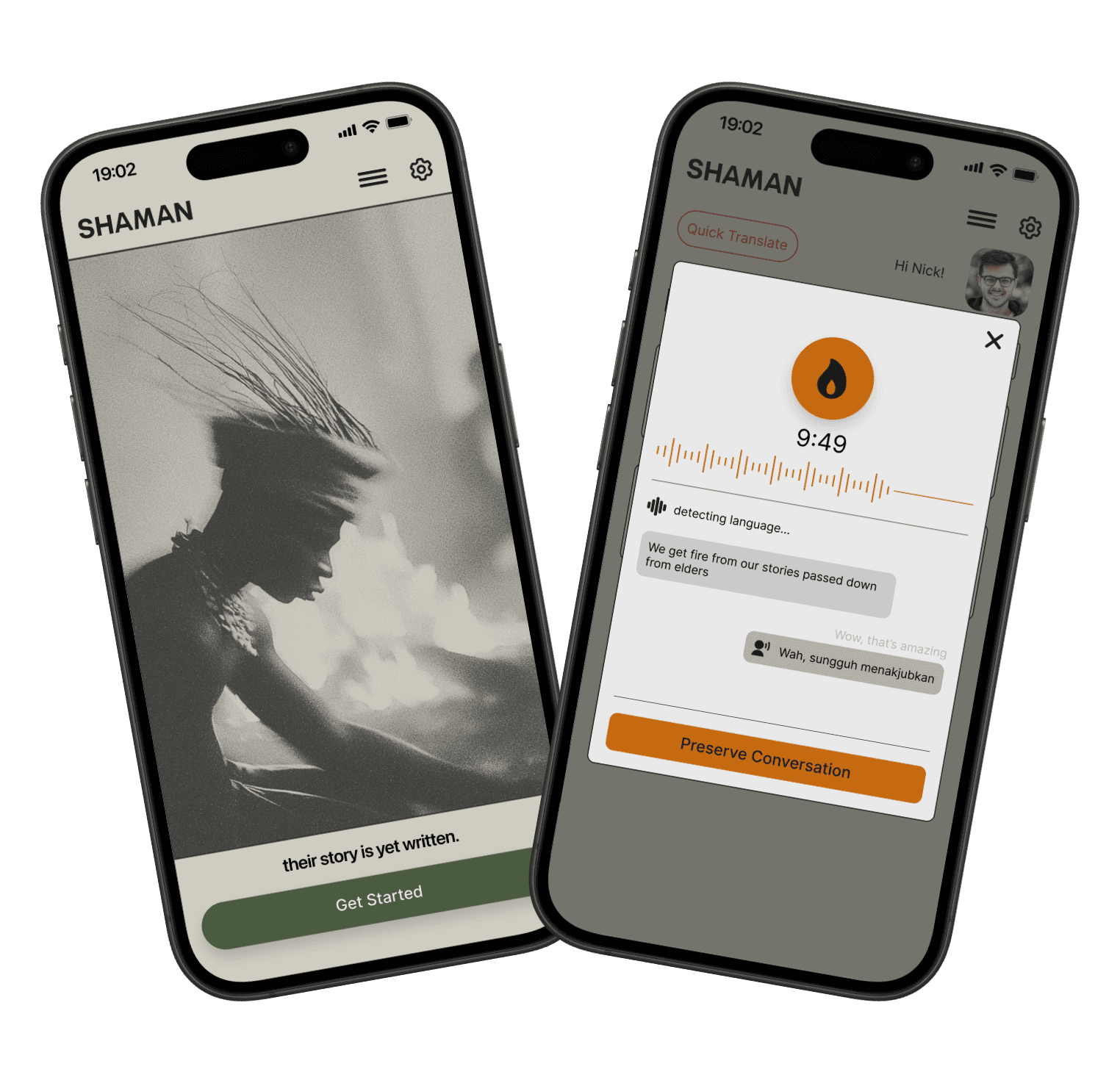
Project Overview
• Timeline: 1 week
• Scope: End-to-end concept and prototype
• Focus: Core workflows only (capture, translate, organize)
Field professionals such as archaeologists, NGO teams, and medical volunteers operate in remote, high-pressure environments where reliable data capture is critical. However, their workflows are often fragmented—requiring multiple tools for notes, translation, and documentation, often without consistent connectivity.
This project explores the design of an integrated fieldwork platform that unifies documentation, translation, and data organization into a single, context-aware system.
Designed as a one-week sprint, this project focused on rapidly identifying core user needs and delivering a cohesive, high-impact solution under tight constraints.
Key Impact
Workflows were previously fragmented. Shaman enables immediate understanding in the field by combining translation, note taking, and context capture into a single interface reducing reliance on third-party translators and fragmented tools.
My Role
Goals
Rapidly identify and prioritize the most critical needs of field professionals working in remote environments
Design a unified workflow that supports capture, translation, and organization in a single system
Ensure the solution remains usable in low-connectivity or offline conditions
Deliver a cohesive, testable prototype within a one-week design sprint
Pain Points
Fragmented workflows:
Field teams rely on multiple disconnected tools for notes, audio capture, translation, and documentation
Lack of data cohesion:
Information is scattered across formats and devices, making it difficult to reconnect insights later
Limited accessibility:
Many tools require constant internet access or lack multilingual support
Loss of context:
Cultural nuance, patient details, and site-specific insights are easily lost or misinterpreted without a unified system
Outcome
Within one week, I designed and prototyped Shaman, an integrated fieldwork platform that consolidates documentation, translation, and data organization into a single workflow.
By prioritizing core user needs early, I moved quickly from identifying key pain points, such as fragmented data and language barriers, to a structured solution supported by a clear user map and validated wireframes.
The final prototype includes:
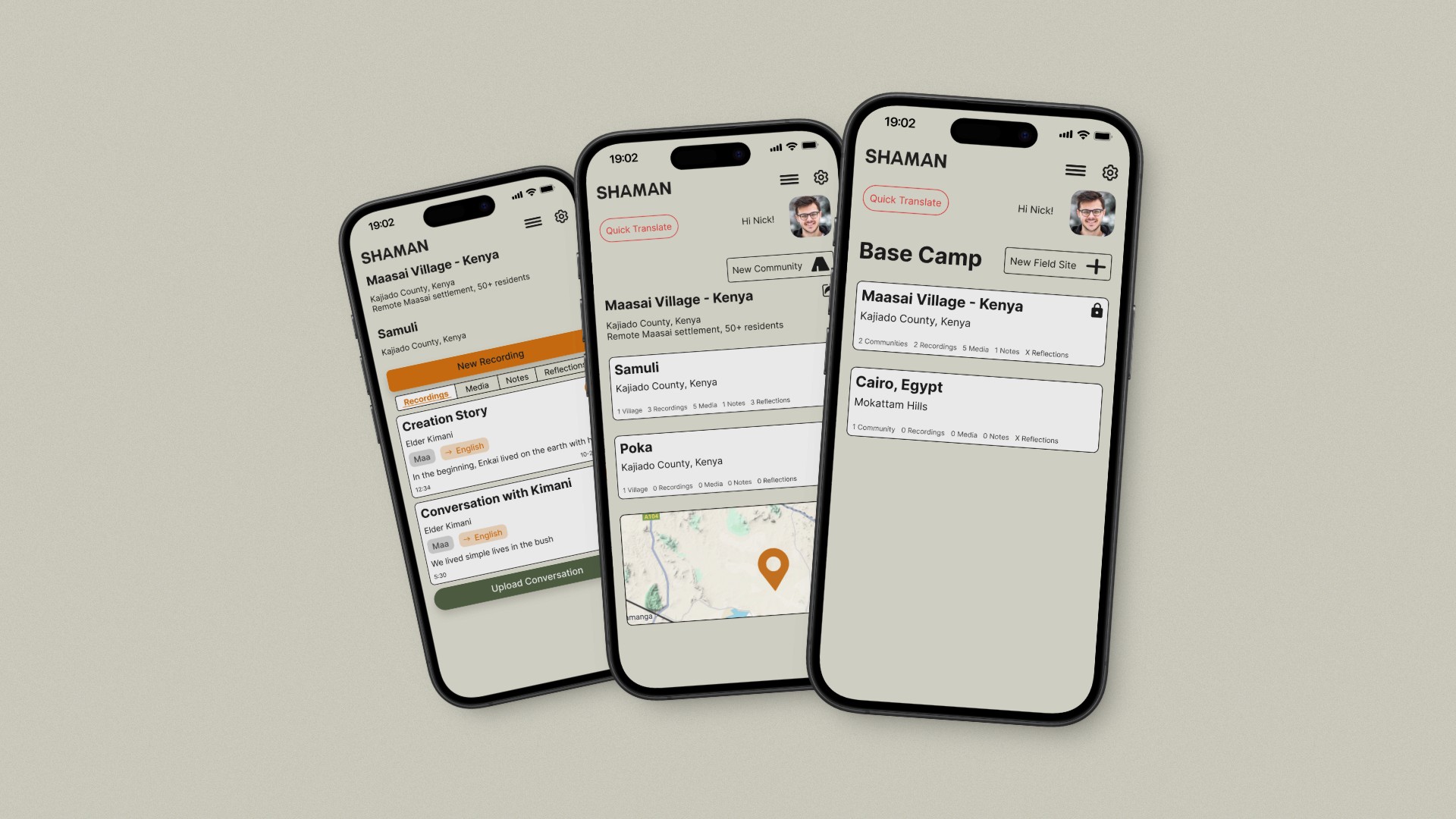
A centralized “Base Camp” for organizing field data
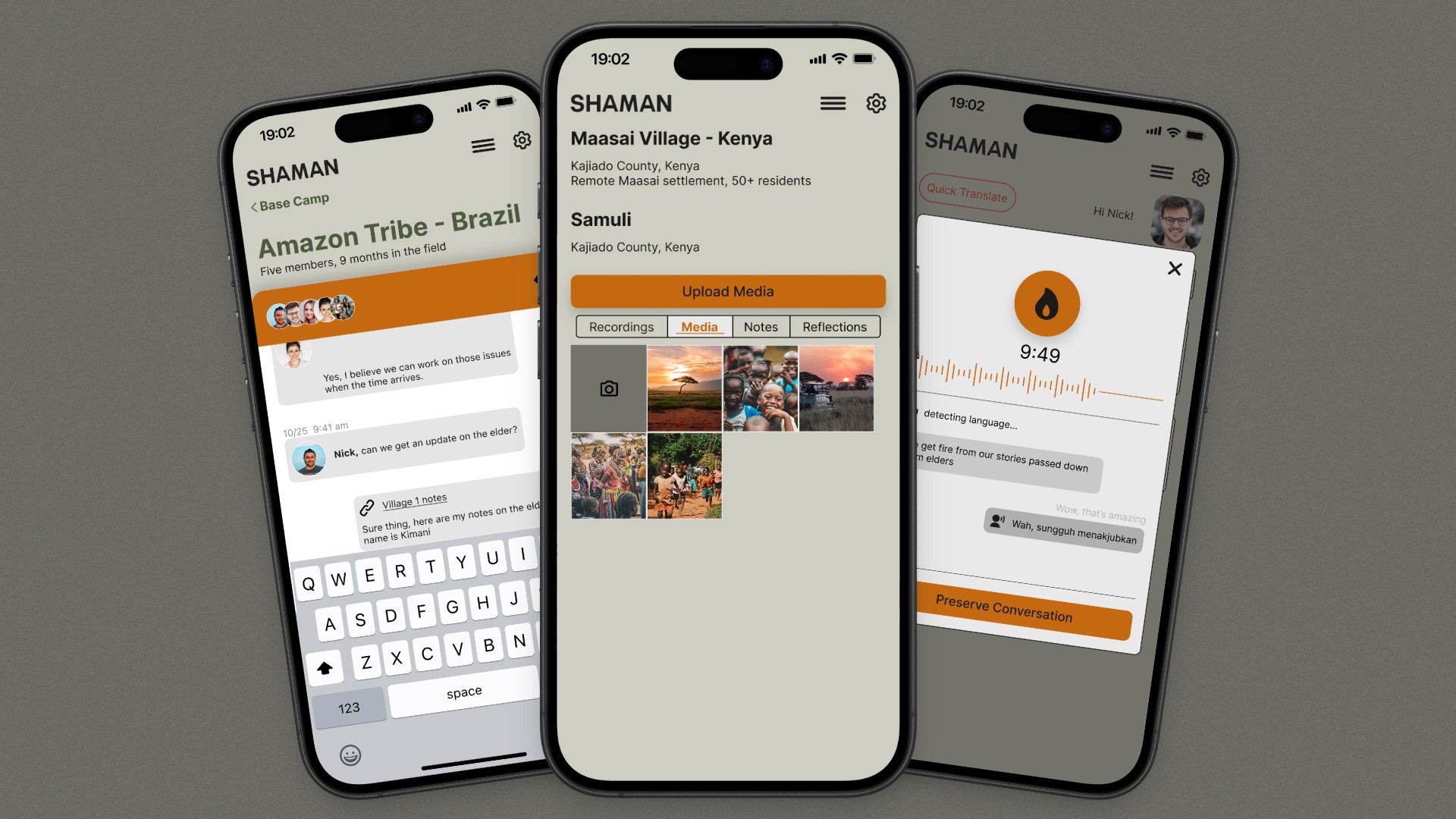
A “Quick Translate” feature for real-time, cross-cultural communication
An offline capable workflow designed for low-connectivity environments
Despite the compressed timeline, the solution demonstrates how complex, high-stakes workflows can be simplified into a cohesive, usable system. This balances speed, clarity, and real world constraints.
User Research
Day One
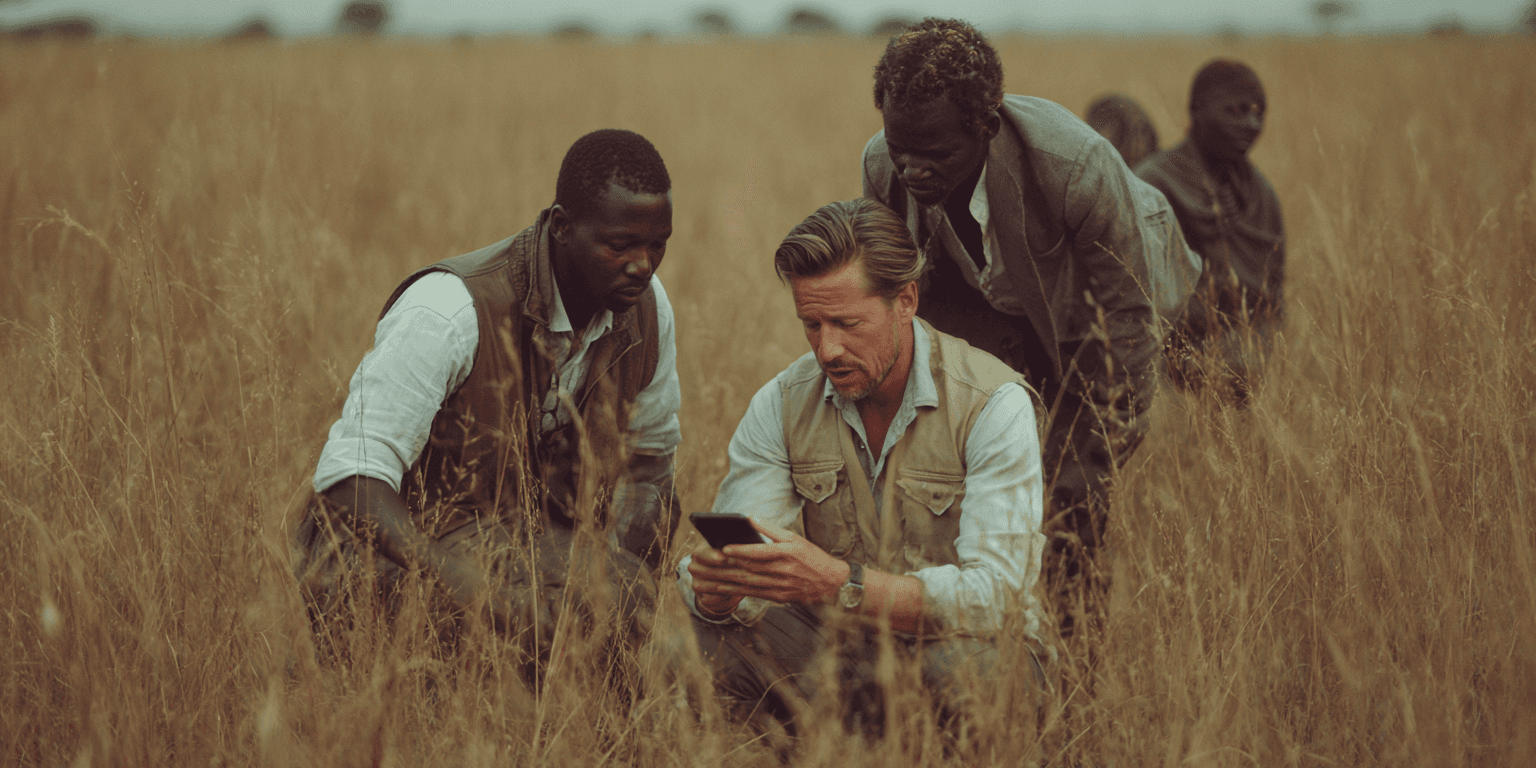
On day one, I spoke with three field researchers with varying levels of experience from seasoned professionals to those newer to fieldwork. Despite their differences, a clear pattern emerged:
Language barriers and unreliable translation workflows were a major point of friction.
Researchers described situations where translators were unavailable, inconsistent, or inaccurate creating risk in high-stakes environments where clarity matters. At the same time, valuable conversations and insights were often scattered across recordings, notes, and memory, making it difficult to revisit or share information with their teams.
A key opportunity surfaced quickly:
researchers needed a way to capture, preserve, and share conversations in real time without relying on external tools or perfect conditions.
This insight directly informed the direction of Shaman, prioritizing integrated capture and translation as core product features.
Competitive Analysis
Day Two
A review of existing tools such as KoBo Toolbox and ODK revealed that while they perform well in structured data collection and offline syncing, they fall short in supporting real time, flexible workflows.
Most platforms prioritize form based input, but lack intuitive ways to quickly record conversations, translate on the fly, or capture unstructured insights in context. Translation capabilities are limited or nonexistent, particularly for multilingual, frontline environments. Additionally, collaboration often depends on exporting data rather than enabling seamless, in-app sharing.
This revealed a clear gap:
existing tools are optimized for structured reporting, not real time field interactions.
Shaman was designed to fill this gap by focusing on immediacy, flexibility, and context enabling users to record, translate, and organize information in the moment, without interrupting their workflow.
These insights helped prioritize speed, reliability, and offline capability as core design principles for the product.
User Flow & System Architecture
Day Two
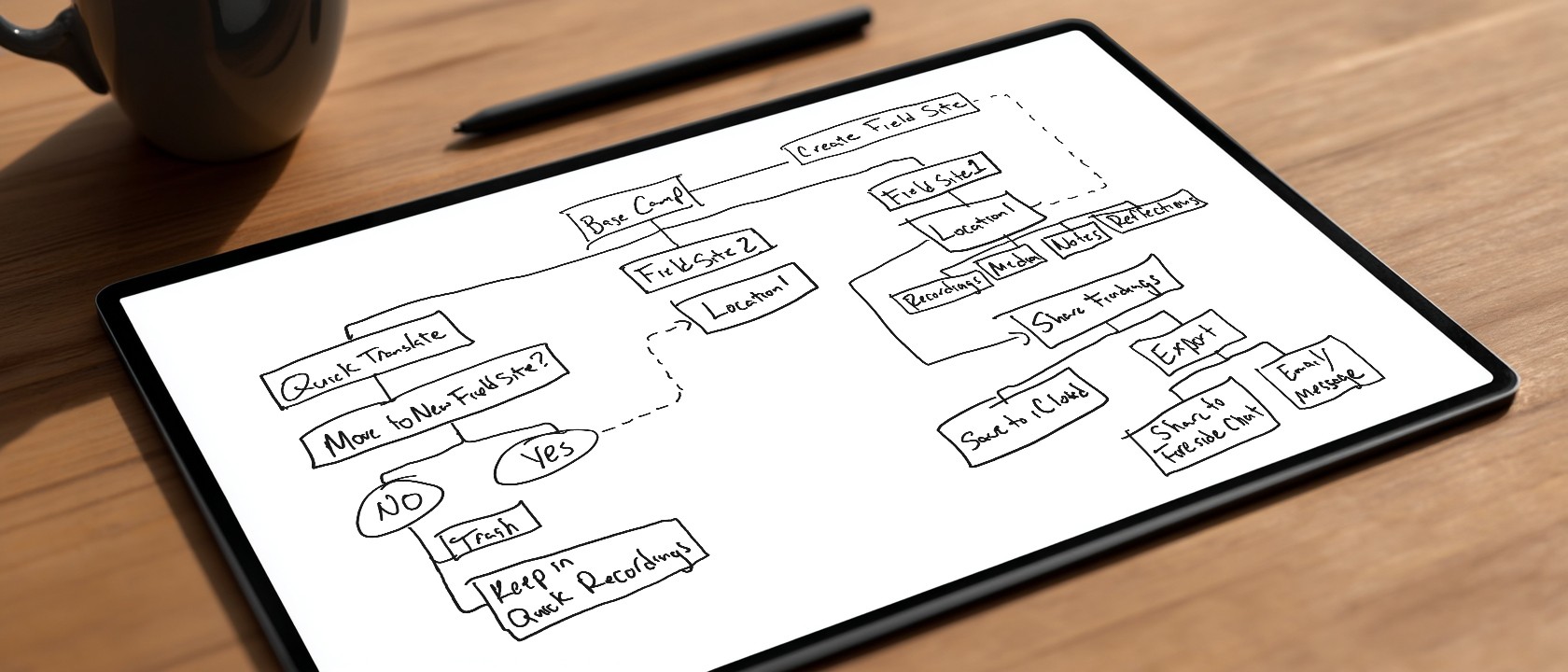
To support high pressure fieldwork, I structured Shaman around a clear, centralized workflow anchored by Base Camp, a primary hub that organizes activity and reduces cognitive load.
From this hub, the experience splits into two core paths:
Immediate action through Quick Translate, enabling fast, real-time communication in the moment
Structured documentation through Field Sites, where users store and organize collected data
Within Field Sites, information is captured across four key formats: Recordings, Media, Notes, and Reflections. This allows users to document both objective data and contextual insight.
To ensure information doesn’t remain siloed, the system supports a seamless transition from capture to collaboration. Users can share findings through a lightweight sharing flow, enabling either cloud synchronization or team communication via Fireside Chat – a centralized space for exchanging updates, insights, and narratives.
This structure was designed to reflect how field teams actually work: capturing information quickly, organizing it with context, and sharing it in a way that supports collective understanding.
Persona
Day Two
After conducting interviews of our three researchers and based on the key research and user map we were able to create a User Persona to find our ideal candidate.

Core Workflows
Day Three
Designed to support three critical moments: capture, communicate, and collaborate.
Shaman was designed around a small set of high-impact workflows that reflect how field teams operate in real environments—capturing information quickly, organizing it with context, and sharing it with others.
Capture & Organize Field Data:
Field professionals need to document findings in real time without interrupting their work. Users can create a Field Site, organize it by location, and capture information across multiple formats, including recordings, media, notes, and reflections, all in one place. This ensures that critical insights are not only captured, but preserved with context for later use.
Share Findings with the Team:
Information in the field is only valuable if it can be shared.
Shaman enables users to quickly move findings into a shared space, allowing teams to access updates, collaborate, and build on each other’s insights without relying on fragmented tools or delayed exports.
Translate in the Moment:
Language barriers are one of the biggest sources of friction in fieldwork.
The Quick Translate feature allows users to capture and translate conversations in real time, enabling clearer communication and reducing reliance on external translators.
Rapid Visual Exploration
Day Three
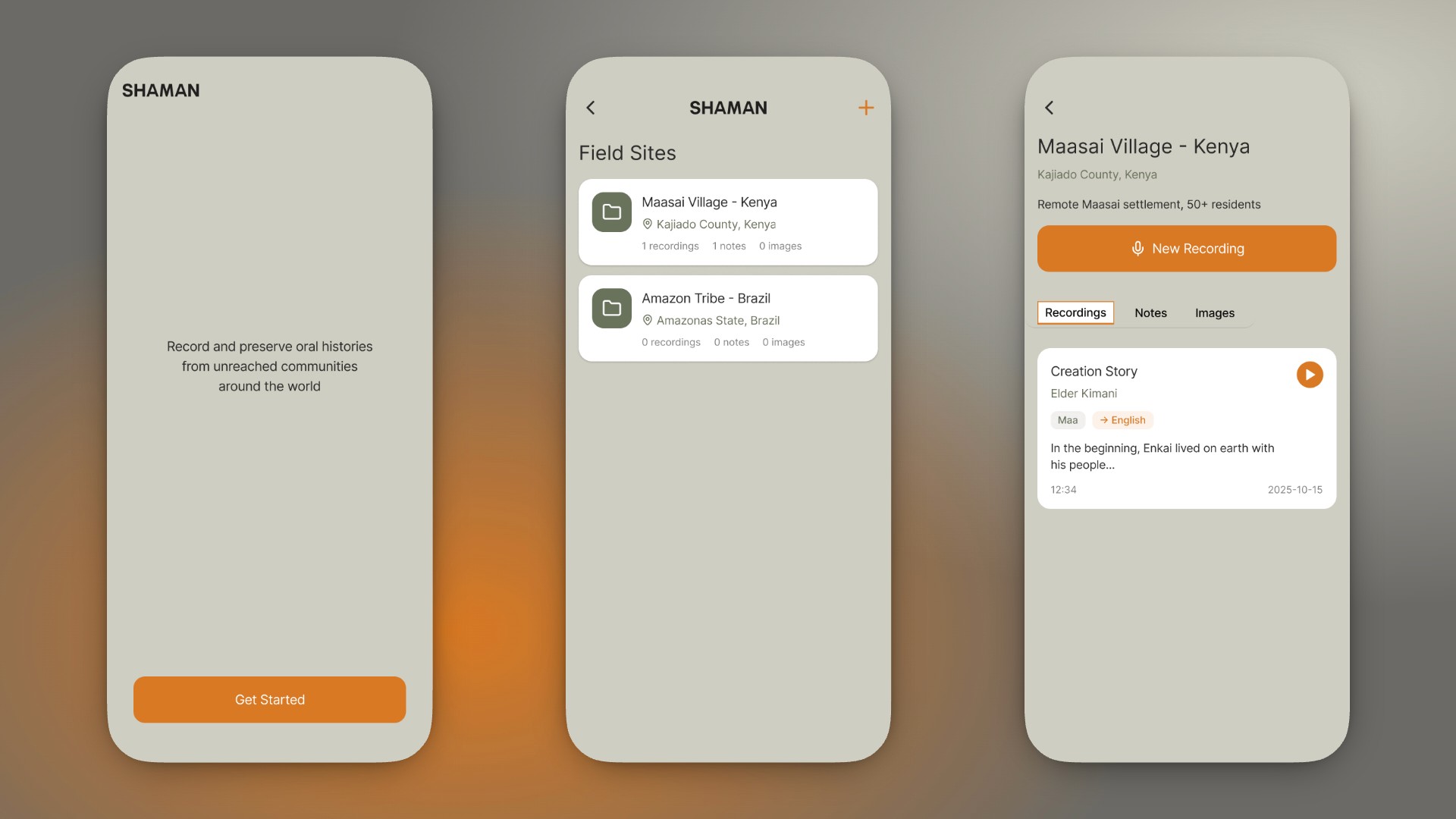
Given the one-week sprint constraint, I used Figma Make to quickly explore the visual direction and overall tone of the product.
Rather than starting from a blank canvas, this approach allowed me to rapidly generate and evaluate multiple interface directions which helped establish an initial look and feel that aligned with Shaman’s purpose: a calm, trustworthy tool for high-pressure field environments.
This exploration acted as a lightweight moodboard, informing decisions around layout, hierarchy, and visual tone early in the process. From there, I refined and adapted the direction through wireframing and prototyping to ensure the final design remained grounded in usability and real user workflows.
Screens are from Figma Make
Wireframes
Day Three
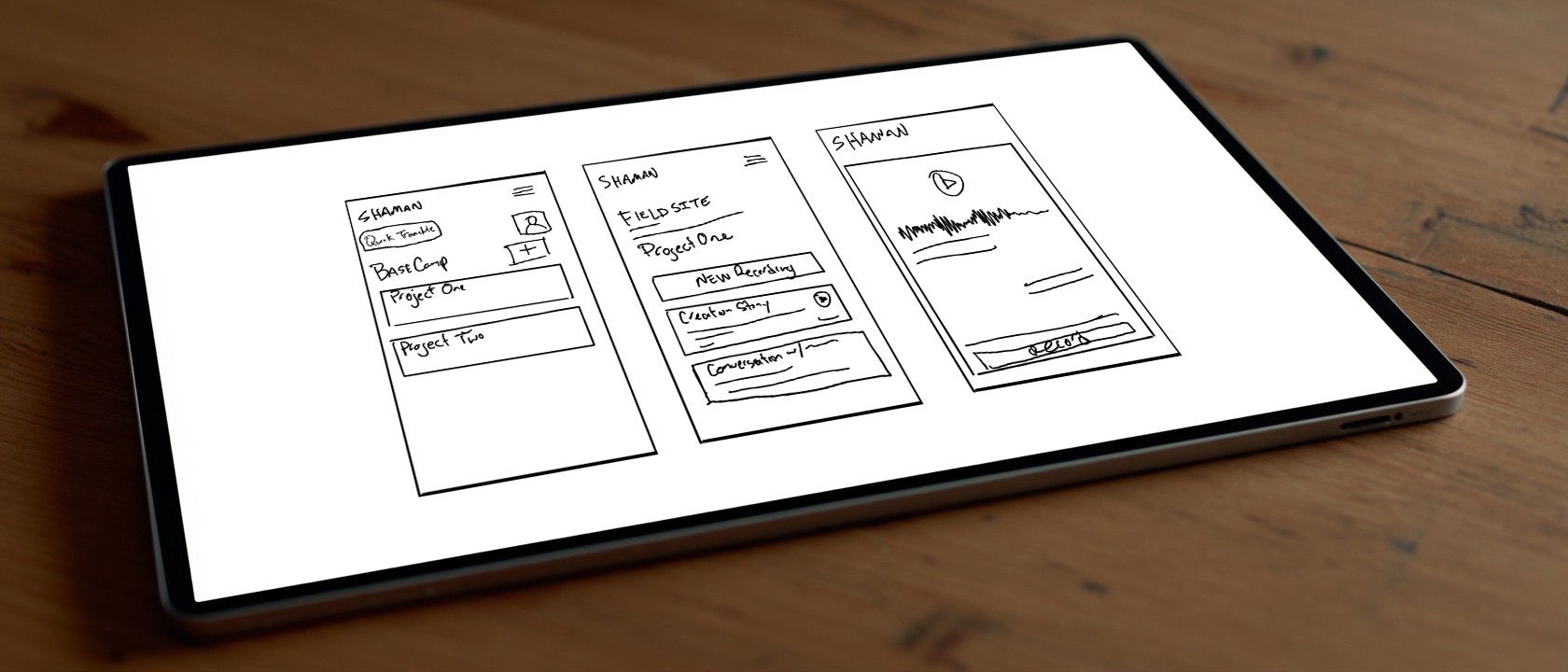
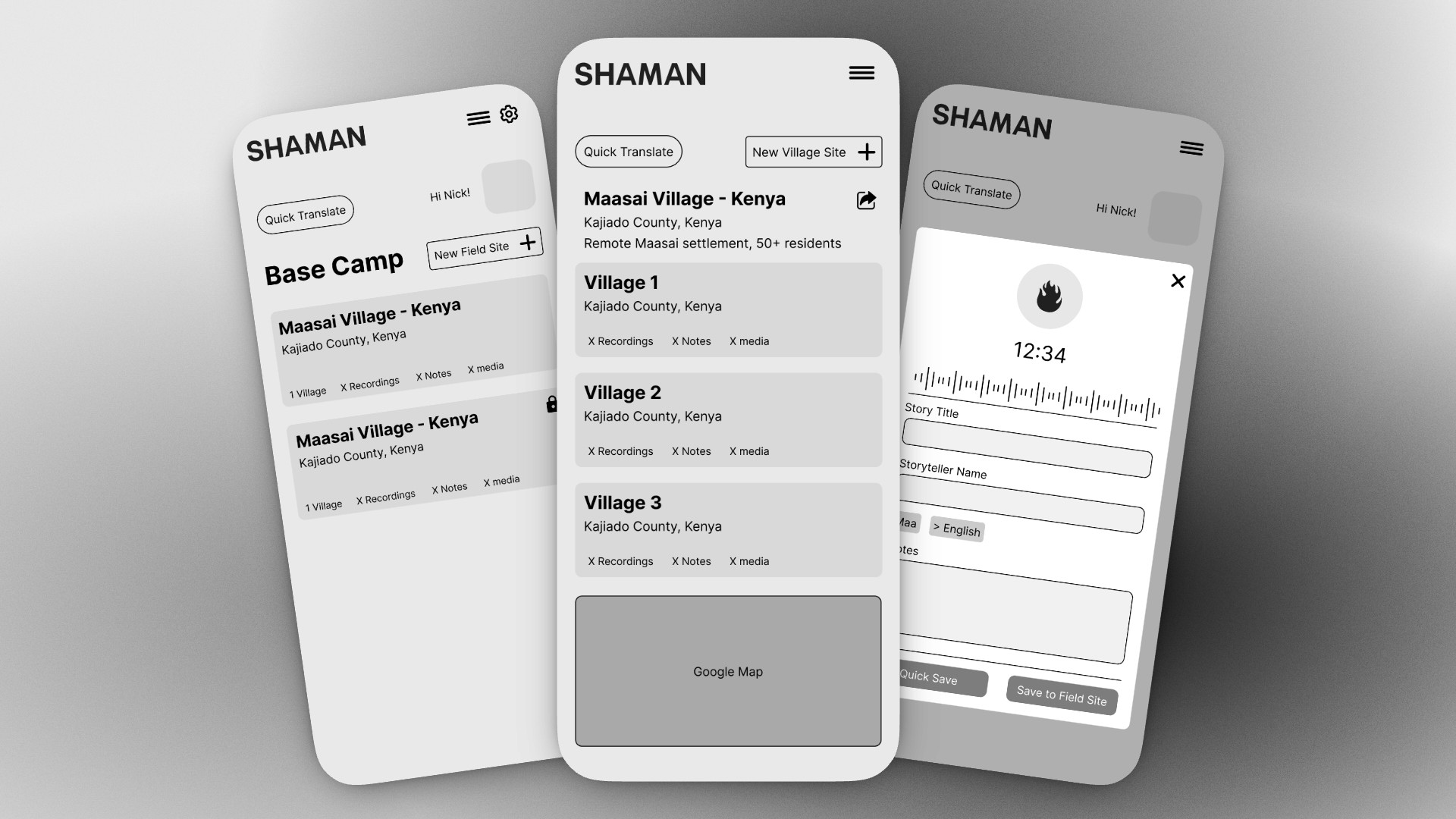
Following initial visual exploration, I developed low- and mid-fidelity wireframes to validate Shaman’s core workflows and ensure the product’s structure supported real-world use.
With a clear directional foundation in place, wireframing allowed me to shift focus to interaction, hierarchy, and flow testing how users move between capturing data, organizing findings, and communicating with their team.
Given the one-week sprint constraint, this step was critical for identifying friction early. Key actions such as creating a Field Site, recording information, and initiating translation were refined to feel immediate and intuitive, without relying on visual polish to carry the experience.
As the design progressed into mid-fidelity, navigation was simplified, relationships between features became more explicit, and transitions between capture, organization, and sharing were tightened.
This progression ensured that the final interface was built on validated structure where visual design enhances usability rather than compensating for it.
Branding and UI
Day Three
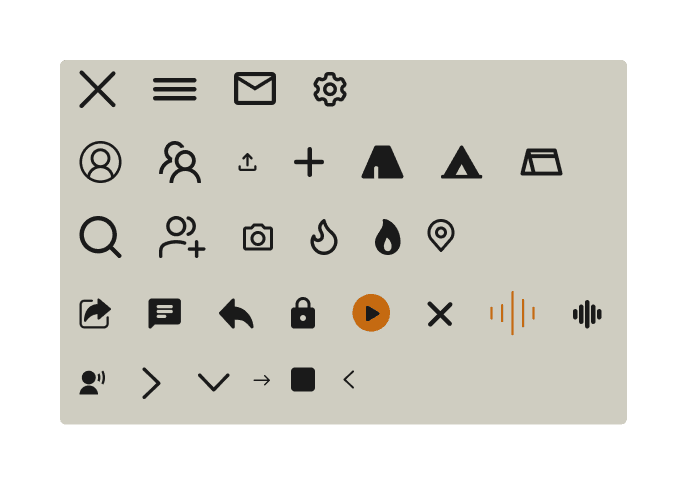
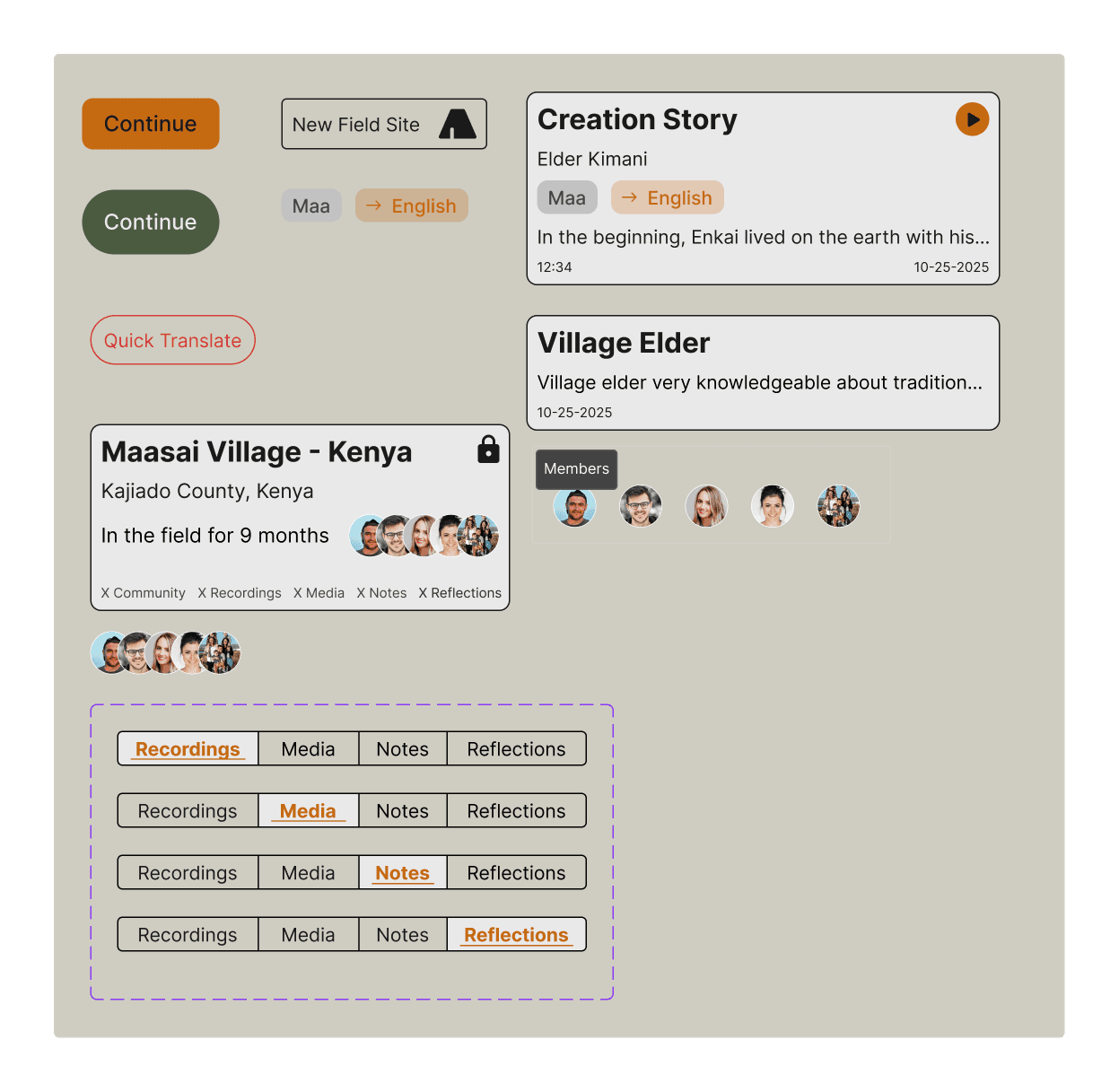
Shaman’s branding was designed to balance clarity, trust, and a sense of purpose reflecting both the realities of fieldwork and the deeper human context behind it.
Historically, the shaman served as a healer, storyteller, and guide—someone responsible not just for knowledge, but for preserving meaning and helping others navigate uncertainty. That idea informed the product’s tone: a tool that supports people working in complex, often high-stakes environments, where capturing and communicating information isn’t just functional, it’s essential.
At the same time, the interface needed to remain simple, fast, and intuitive. The visual system leans into a modern, minimal aesthetic to reduce friction, ensuring that users can focus on their work rather than the tool itself.
This balance between narrative and utility is reflected throughout the product. The central hub, Base Camp, provides a grounded space for organizing and accessing information, while Fireside Chat creates a shared environment for communication supporting both critical updates and human connection within teams.
Content is structured around four primary formats: Recordings, Media, Notes, and Reflections, each designed to capture a different layer of field insight, from objective documentation to personal interpretation.
Together, the naming system and interface work to reinforce a clear, cohesive experience: one that feels purposeful without being heavy, and expressive without sacrificing usability.
Final Prototype
Day Four
Summary
Within a one-week design sprint, I conceptualized and prototyped Shaman, an integrated fieldwork platform designed to replace fragmented tools with a unified, context-aware workflow.
By quickly identifying critical user needs, such as language barriers, disconnected data capture, and unreliable connectivity, I prioritized a focused set of features that support real-time communication, structured documentation, and team collaboration.
The final prototype centers around a Base Camp hub for organizing field data and a Quick Translate feature for immediate, cross-cultural communication. This allows users to capture, interpret, and share information without interrupting their work.
Despite the compressed timeline, the solution demonstrates how complex, high pressure workflows can be simplified into a cohesive, usable system balancing speed, clarity, and real-world constraints.