Project Overview
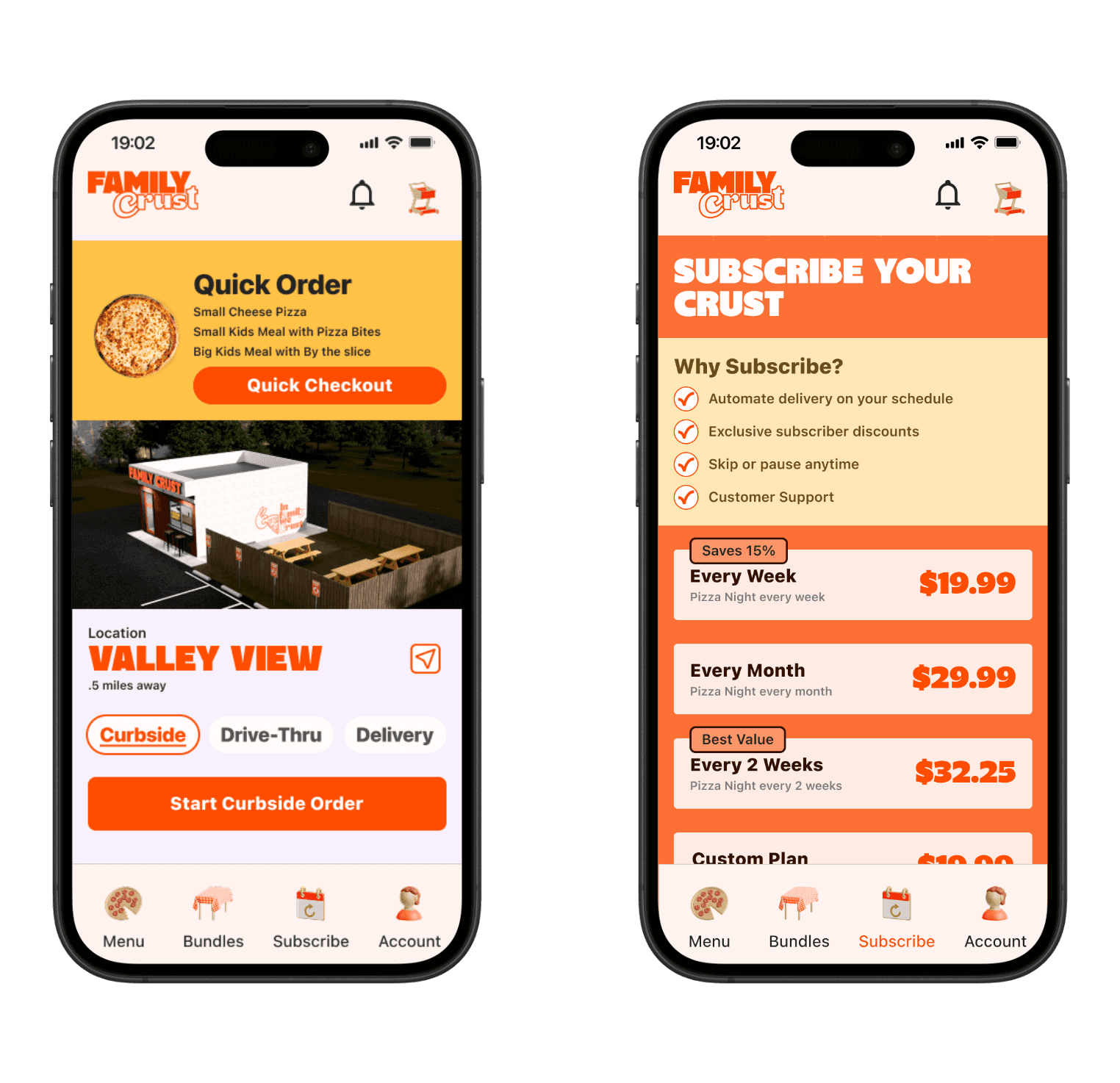
Family Crust is a curbside-pickup-first pizzeria designed specifically for busy families navigating the reality of weeknight dinner. The ordering app reimagines pizza night not as a transactional fast-food moment, but as a low-stress, family-centered system that supports real routines, reduces decision fatigue, and creates room for connection.
The building layout and meal packaging are designed to foster those moments of intentional interaction with family and build strong connection to each other – all centered around our favorite food night. Through a focused mobile ordering experience, families can quickly place curbside orders, reorder favorites with saved Family Profiles, or subscribe to recurring Family Night Bundles that take the planning out of dinner. The design prioritizes speed, predictability, and warmth meeting parents where they actually are: in the car between school pickup and practice, in line at the grocery store, or finally home and ready to eat.
Key Impact
Reduced ordering friction for families by replacing repetitive menu navigation with saved Family Profiles and one-tap reorder.
Transformed pizza night from a reactive necessity into a reliable family ritual and designed for the car, the chaos, and the Tuesday night scramble.
My Role
• Client Project
• Product & UX Design
• Visual Design & Brand System (3D build out, animation, social media)
• Information Architecture
Key Goals
Simplify and accelerate meal decisions to reduce the mental load of feeding a family on a busy night
Support both on-the-go and at-home ordering so families can eat well no matter where the evening takes them
Reduce cognitive load through saved preferences, smart reordering, and pre-built bundles
Create space for connection by removing friction from the parts of dinner that don't need to be hard
Balance speed and affordability with experiences that still feel intentional, not just convenient
Results
Usability testing validated the core design decisions behind Family Crust. The Quick Order flow achieved a 100% task success rate, with users completing curbside orders in under a minute and navigating confidently under simulated time pressure. Family Profiles consistently reduced perceived effort, with users noting the experience felt fast and personal like the app already knew them. The subscription flow, while successfully completed by all participants, surfaced a clear friction point around commitment and clarity, which directly informed a key design iteration: leading with transparent pricing and plan value before asking users to choose a cadence. That single change brought the subscription experience in line with the confidence and ease users felt in Quick Order. Testing also revealed a discoverability gap where users gravitated so naturally toward Quick Order that higher-value flows like the full menu and subscription were nearly invisible, pointing to a meaningful next step for future iterations

Problem to Solve
For many parents, pizza night isn’t leisurely, it’s reactive. It’s a solution to a busy schedule, late practices, long workdays, and hungry kids. Ordering often happens on the go, sometimes resulting in families eating in the car between commitments. Traditional pizza packaging and menu structures aren’t designed for that reality. They lead to spills, awkward handling, messy fingers, and unnecessary stress.
Even when families make it home, pizza night can feel more like a logistical task than a shared experience with paper plates, rushed cleanup, and little intentionality.
Busy families experience consistent friction around these areas, fast on-the-go food ordering and family dinner nights, particularly during the high-pressure stretch between school, work, and activities. Pizza is often the default solution because it is fast, affordable, and broadly liked but the systems surrounding it (ordering platforms, menu structures, packaging, pickup flows) are not designed for the realities of family life. Parents have to navigate multiple preferences, time constraints, and logistical challenges, often resulting in rushed decisions, inefficient ordering, and fragmented dining experiences. Existing pizza ordering systems optimize for speed and individual transactions, but they fail to support the complexity of ordering for an entire family. The result is a meal that solves for hunger, but not for stress, connection, or consistency.
Research & Insights
Pre-built options and "remember my order are non-negotiable. The most time consuming part of ordering is negotiating individual preferences. Kids tend to want the same meals on repeat, but most apps force parents to rebuild orders from scratch every time.
Family bundles act as a decision shortcut. Rather than juggling multiple individual meals, parents gravitate toward bundles that feed the household with light customization. They reduce cognitive load and signal value, convenience, and preparedness.
Curbside pickup wins over delivery and drive-thru. Parents consistently preferred curbside for its predictability, no delivery uncertainty, and none of the friction of ordering through a drive-thru speaker with kids in the back.
There is a real gap between the family dinner parents want and the one they actually get. Families value dinner as connection time, but busy schedules push them into reactive, last minute decisions. The opportunity is to design a system that helps them reclaim that time rather than just feed them faster.
Competitive Analysis
To understand the landscape Family Crust would enter, a competitive audit was conducted across both national chains and local operators in the Jonesboro area. Domino's, Little Caesars, Papa John's, and Chick-fil-A were evaluated alongside regional players Lost Pizza Co. and Pizza Chef. The audit revealed a consistent gap across the board: while nearly every competitor had optimized for speed or variety, none had meaningfully designed around the family as a unit. Family bundles were either absent, buried, or repurposed from large-group ordering. Digital ordering experiences prioritized upselling over simplicity. And the chaos of weeknight decision-making with multiple preferences, tight schedules, limited patience was largely ignored. Chick-fil-A came closest with its Family Style Meals and geofenced pickup flows, but even those features varied by location and stopped short of a true family-first experience. The gap was clear, and it pointed directly to where Family Crust could own something no one else had claimed.
Affinity Map
I conducted competitive analysis, stakeholder interviews, parent interviews and surveys, and task-based usability testing with parents who regularly order takeout for their families, as well as pizzeria owners and operators for operational context.
How might we help families reclaim meaningful time together during dinner by transforming pizza night into a reliable, low stress system that supports real family routines and encourages connection?
Personas
After conducting interviews and based on the key demographics summary we were able to create our User Personas to find our ideal candidate.

Feature Priorities
Site Map
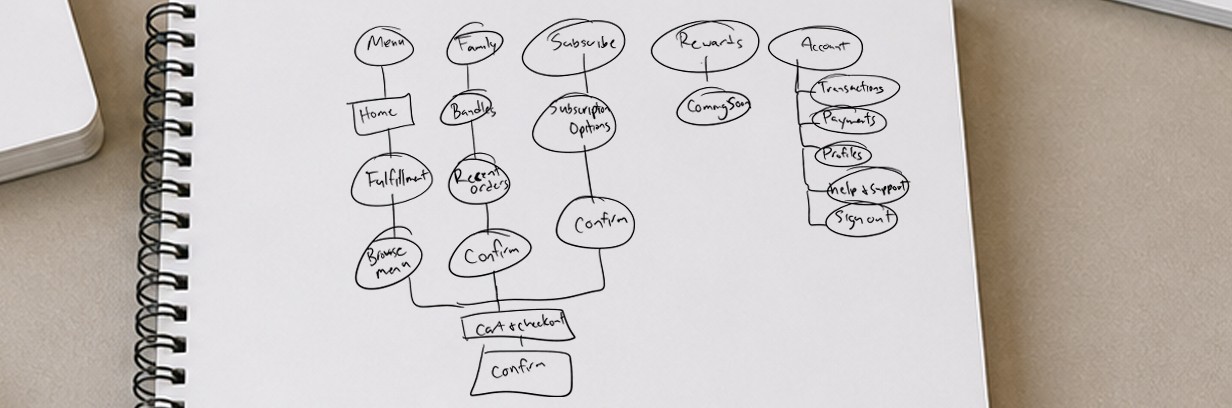
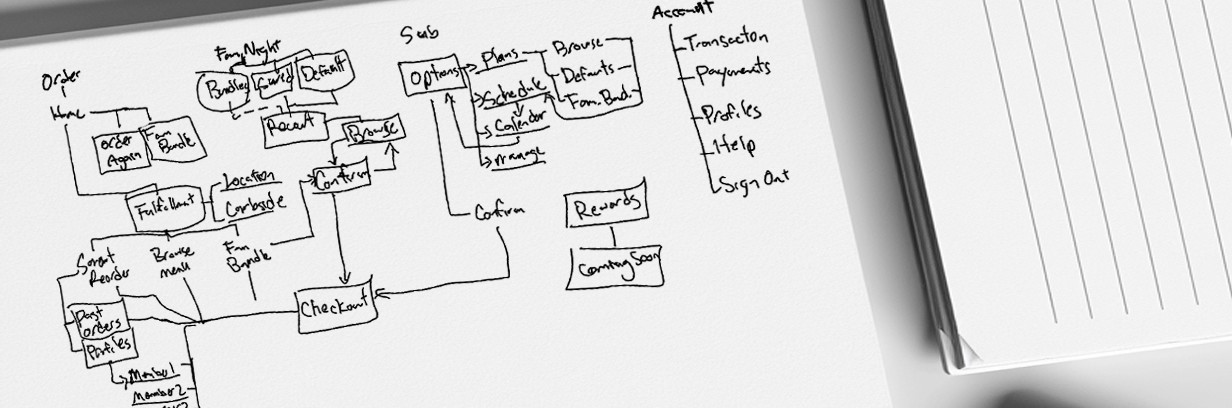
The site map defined Family Crust's backend organization anchoring the experience around four primary surfaces: Quick Order, Menu, Subscriptions, and Account. Mapping the structure early made it clear which actions needed to be one tap away (reorder, curbside pickup, family bundle) and which could live deeper in the hierarchy (subscription management, order history). It established a hierarchy that protected speed and simplicity for the most common task: getting dinner ordered in under a minute.
User Flow
With the personas in mind, I built out user flows for the two highest-leverage moments: the “Quick Order” flow, which gets a parent from app open to curbside confirmation with as few taps as possible, and the “Subscription Setup” flow, which lets a planner-parent commit to a recurring Family Night Bundle with clear pricing and flexible scheduling. The flows reinforced the brand promise of reclaiming family routines without adding friction, and exposed exactly where decisions needed to be pre-loaded versus deferred.
Wireframes
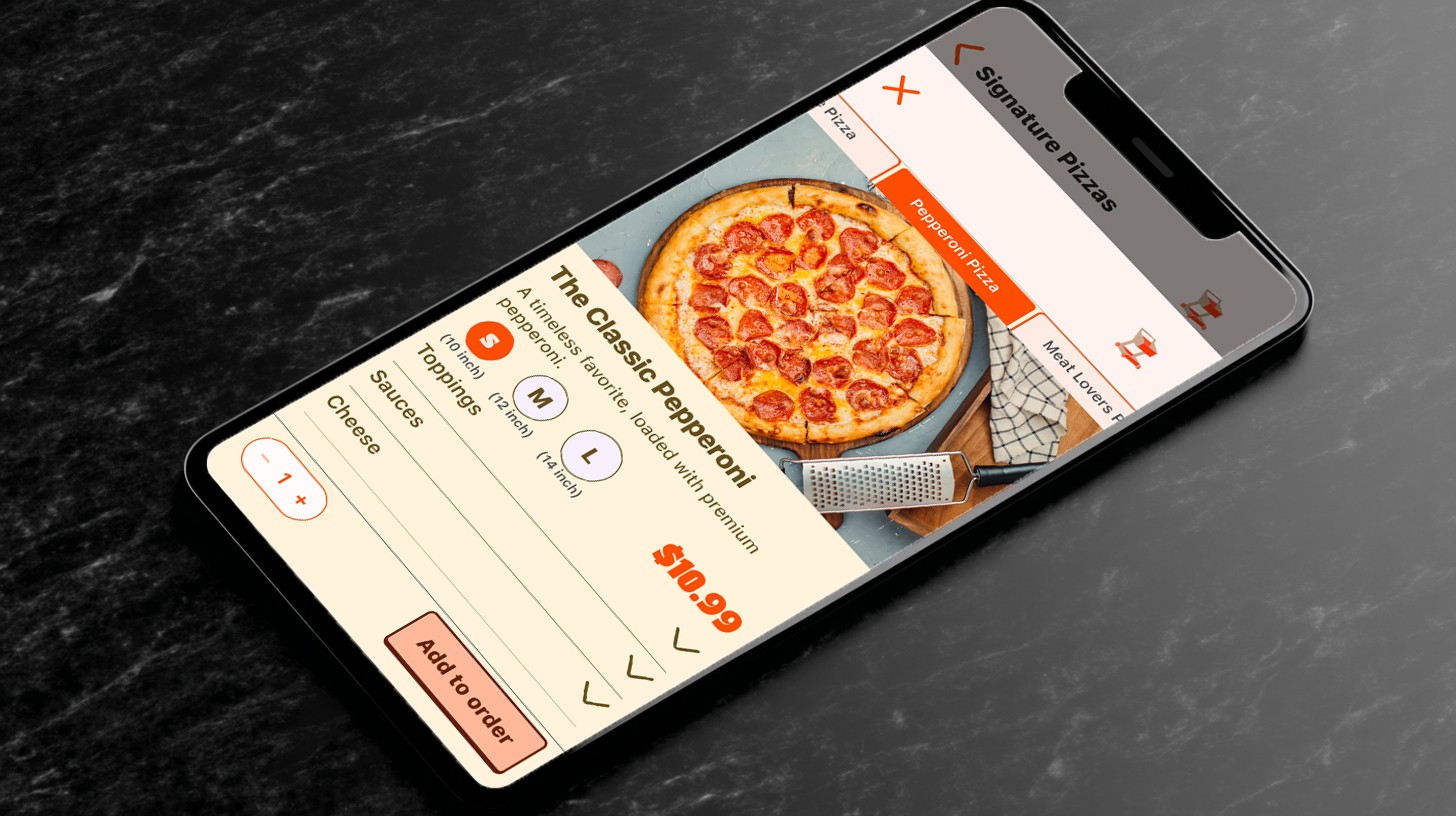
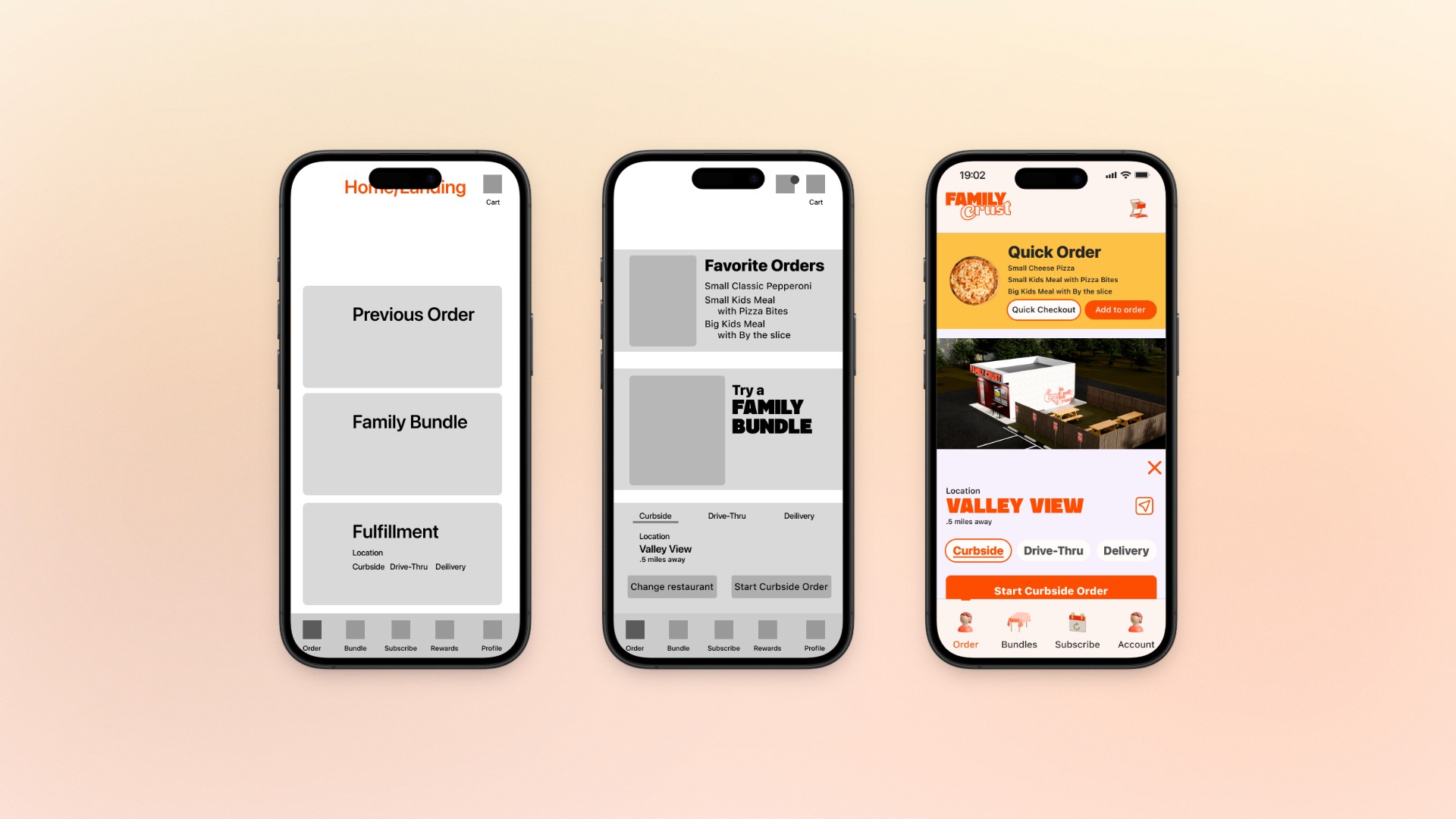
Wireframes brought the brand to life across the full ordering experience, translating the warm-but-efficient personality into typography, color, iconography, and component spacing. They clarified how Quick Order should feel almost effortless, how Family Profiles should feel personal without being precious, and how the subscription experience should communicate value at a glance. For both me and the stakeholder, the hi-fi screens provided a realistic preview of how a parent would actually move through the app on a Tuesday night.
Branding and UI
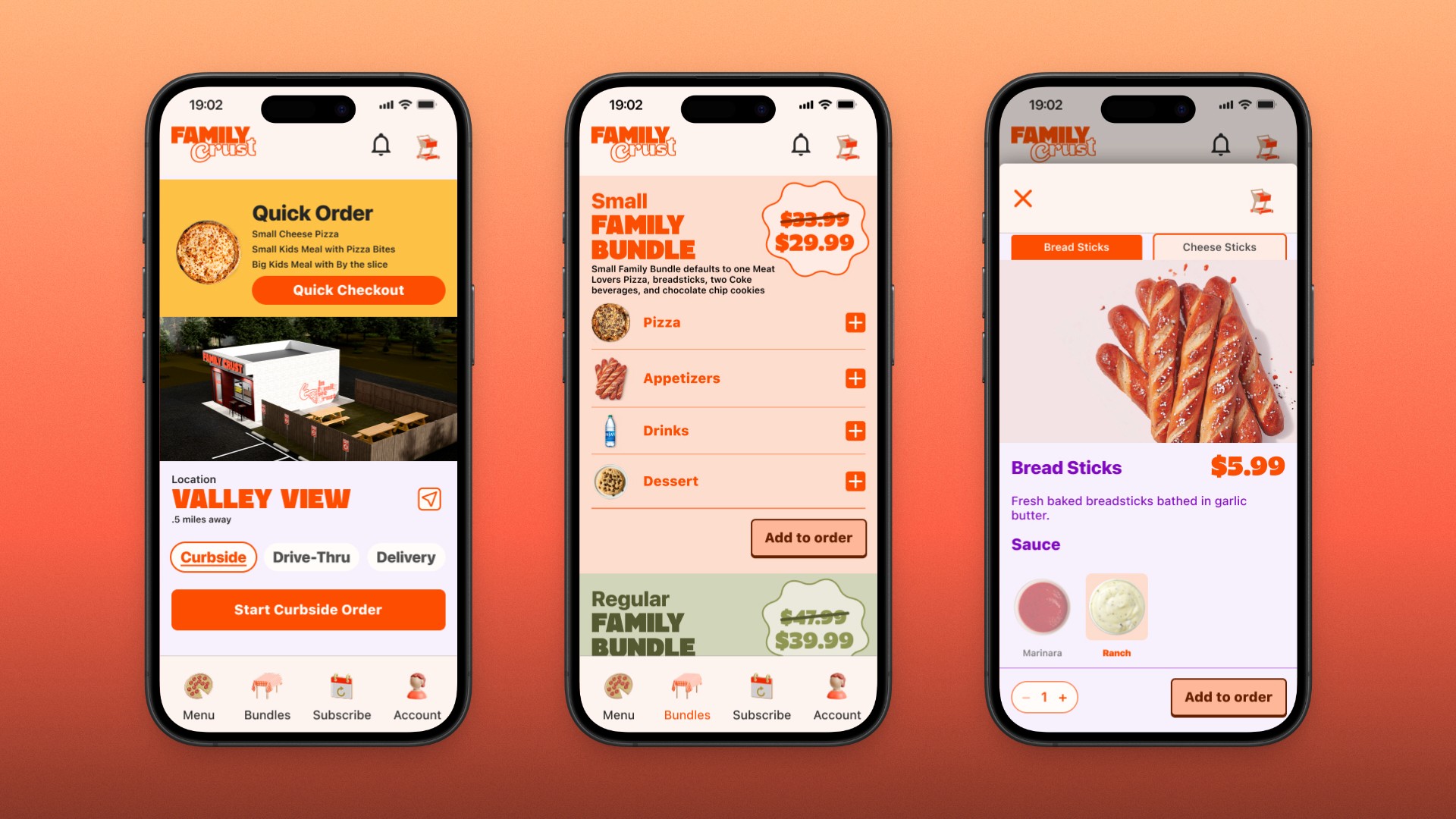
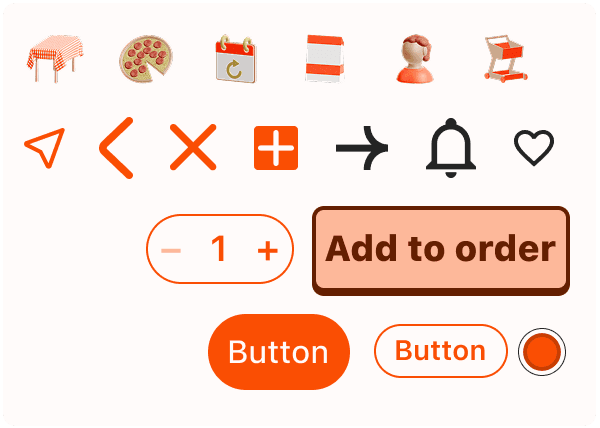
Family Crust lives in a deliberate sweet spot. It's energetic enough to compete with the fast convenience giants, yet warm and approachable enough to feel like a place families actually want to gather. The bold orange, cream, and golden palette communicates appetite and urgency without sacrificing the inviting, community-centered feeling that defines a great family pizza experience. The expressive display typography carries personality and playfulness, while SF Pro keeps the UI clean and readable where it matters most. The result is a brand that says "we're fun" and "we get families" in the same breath. It's a visual identity that feels right at home on a kid's favorite Friday night and still looks sharp enough to scroll past without skipping.

Beyond the Brand
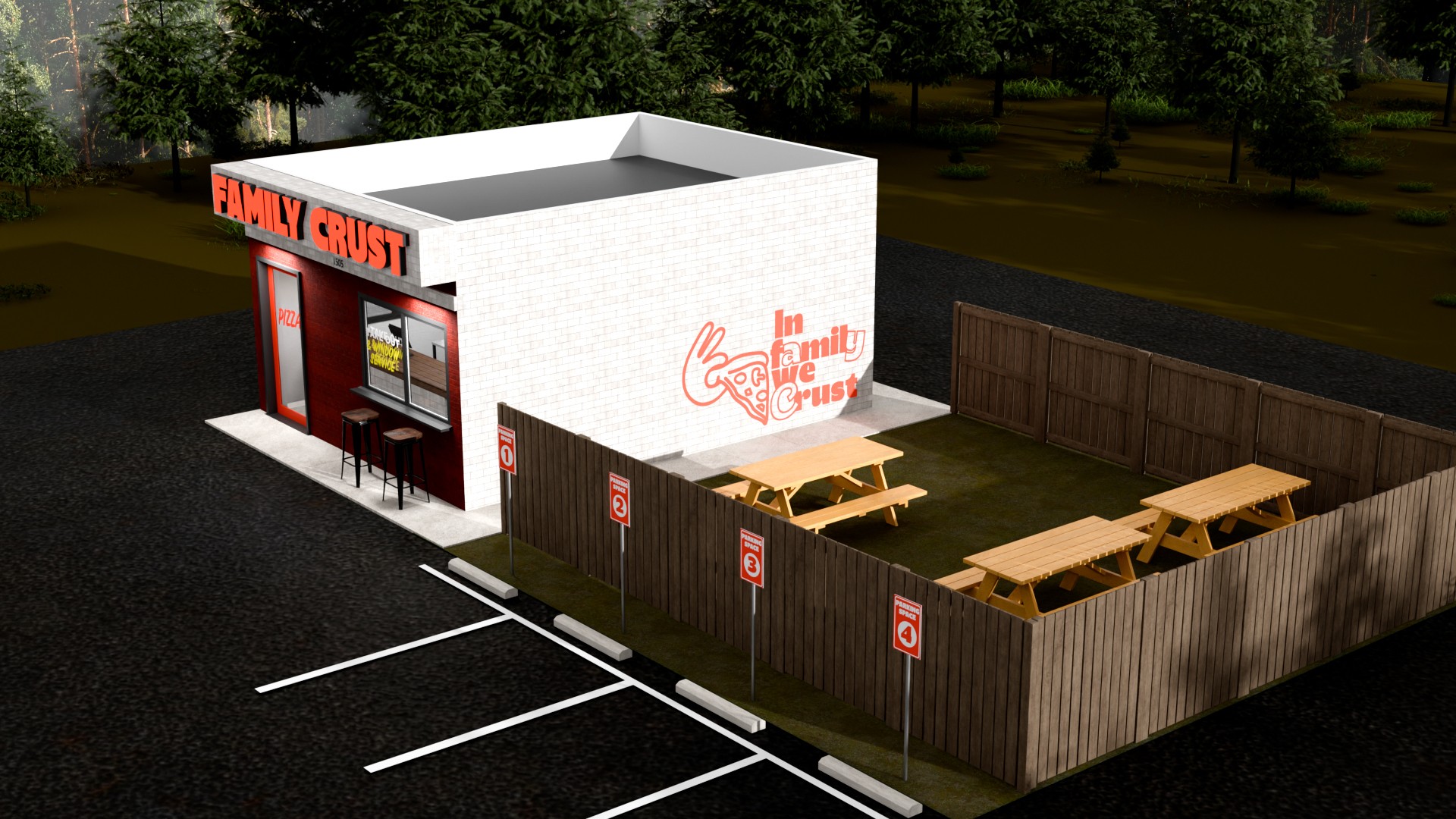
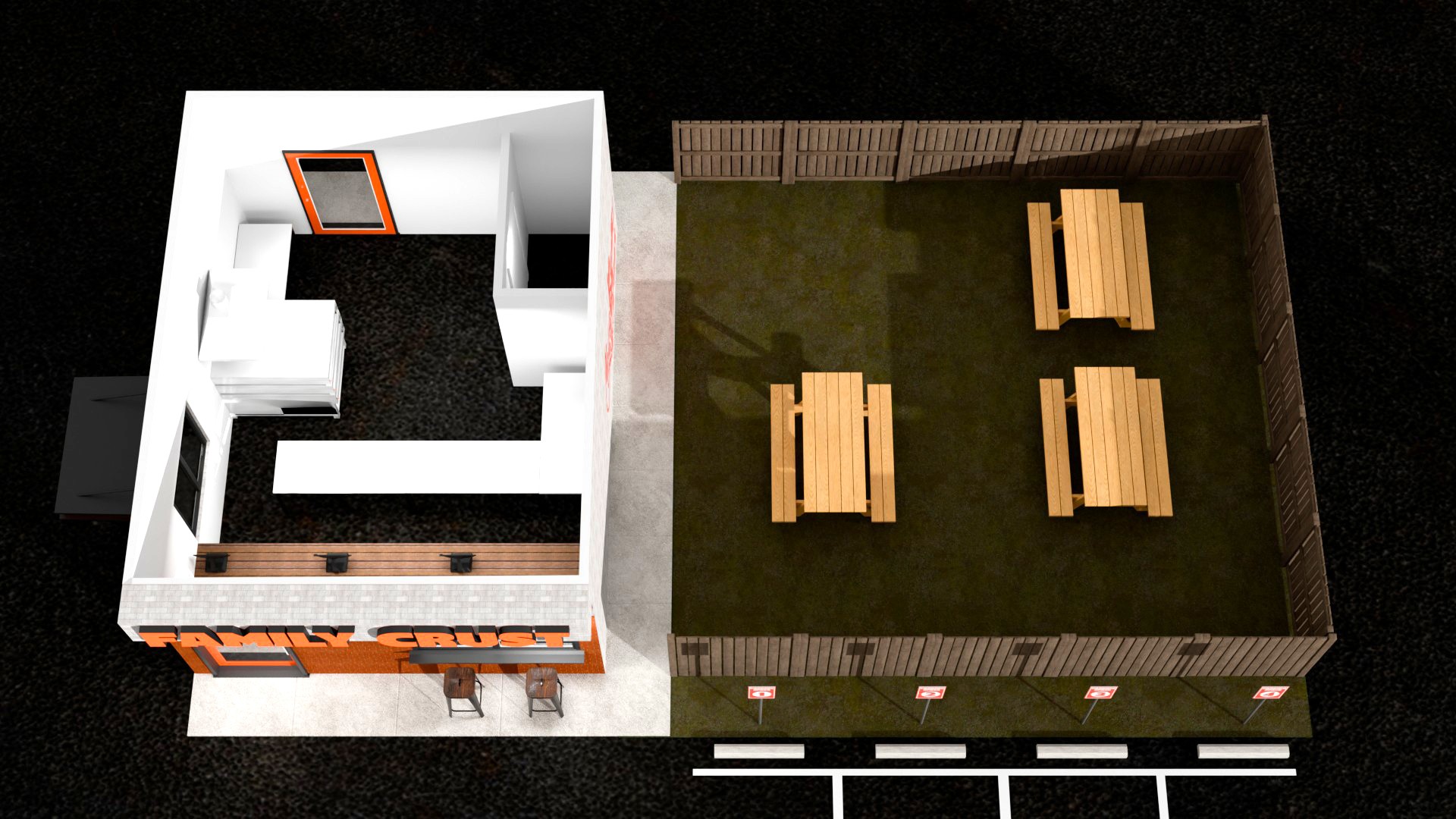
Because Family Crust is a brick-and-mortar storefront, I had the opportunity to build out the restaurant in 3D giving the stakeholder a way to visualize the space in context and see how the physical location would feel alongside the broader brand identity. The goal was to close the gap between logo and lived experience.
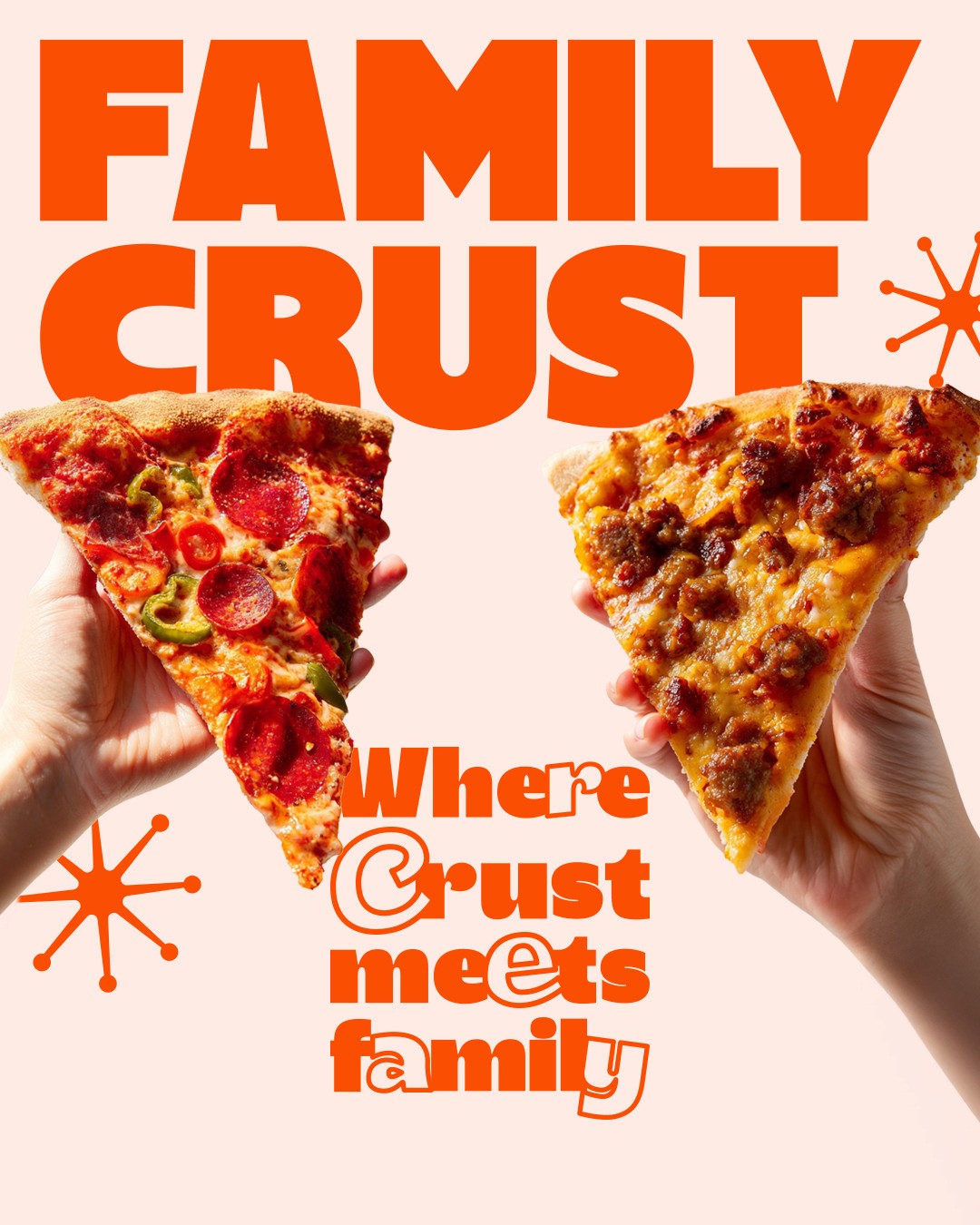
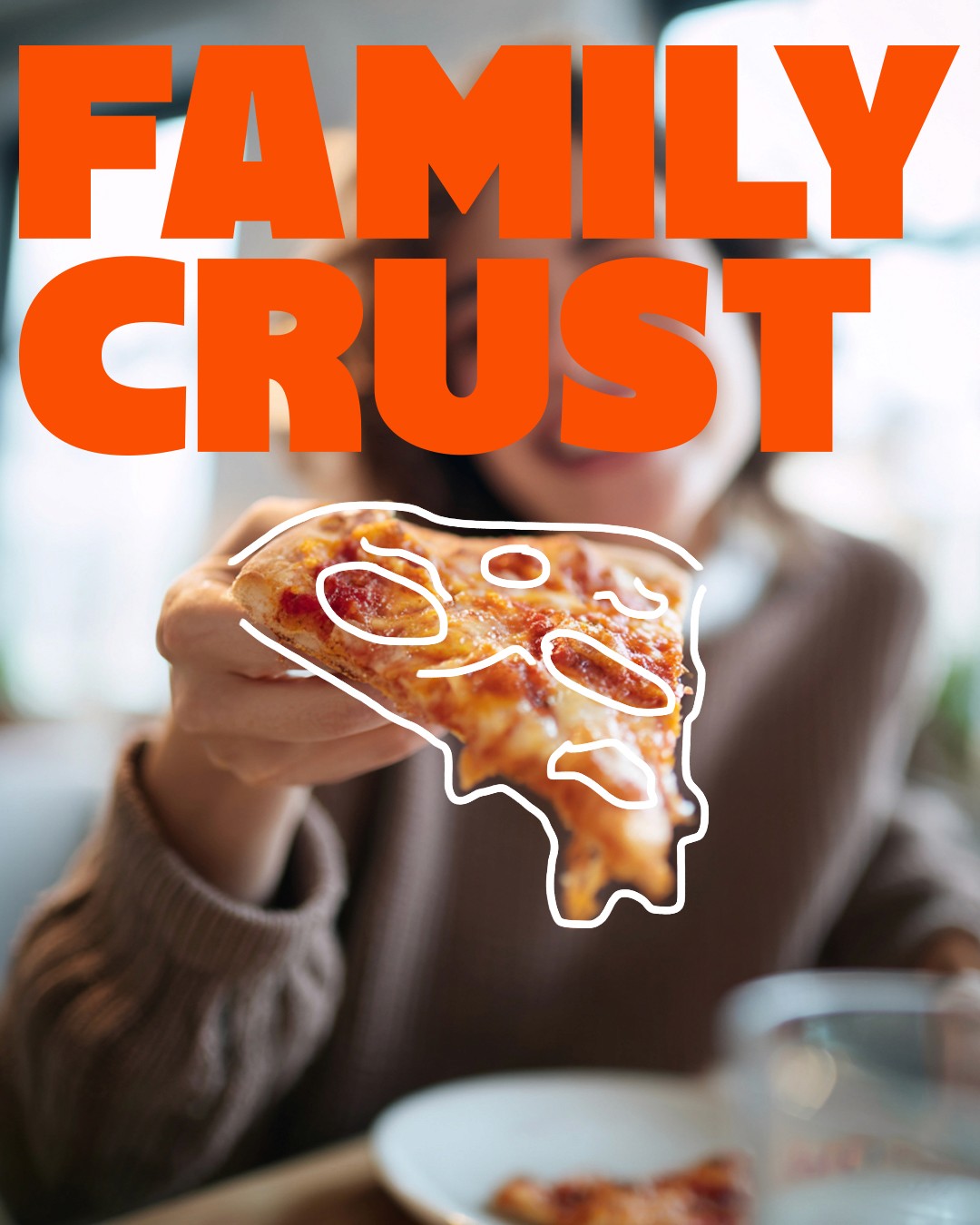
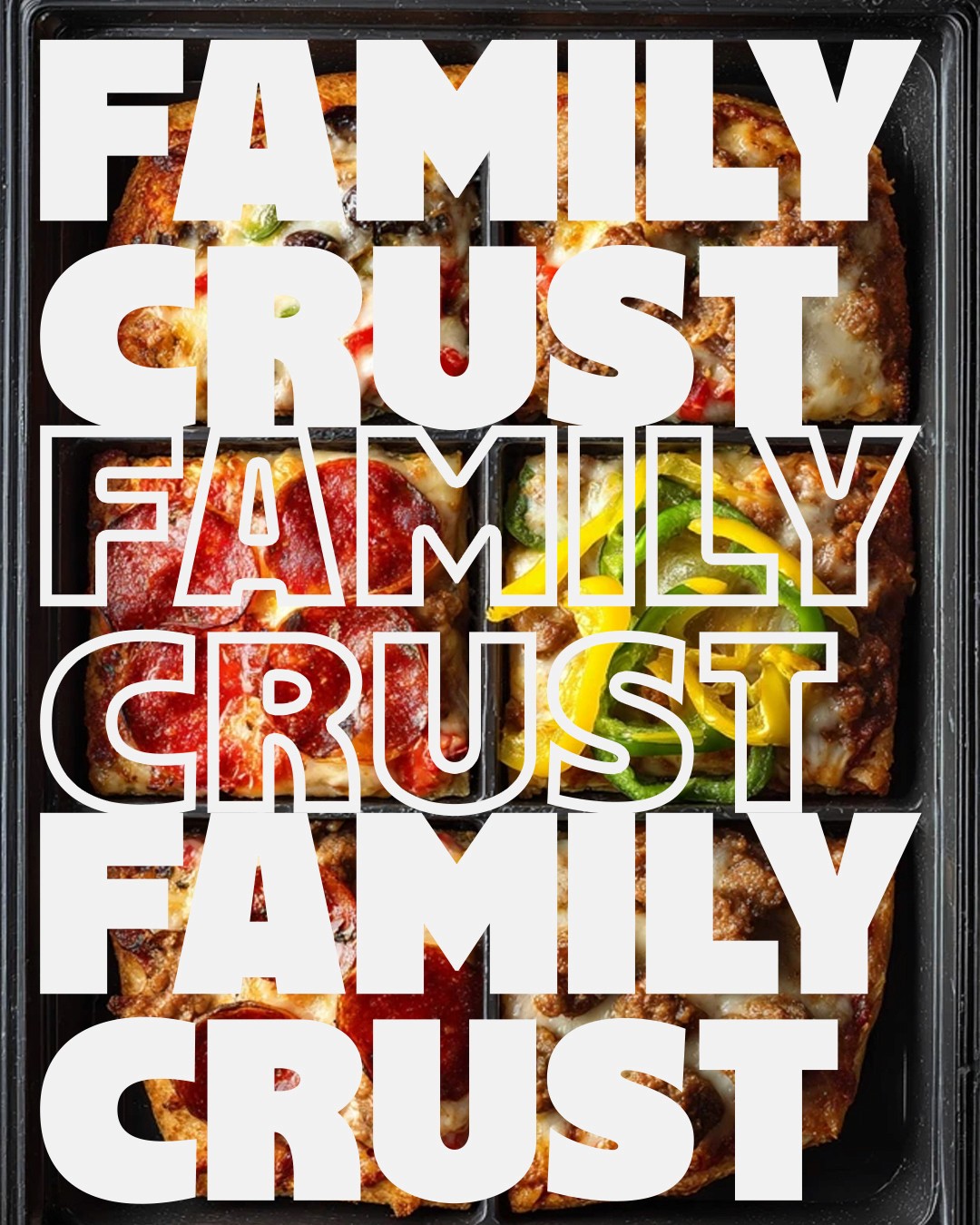
From there, I extended the brand into a handful of social media posts the owner could use at their discretion. These were ready to go, on-brand, and one less thing to think about.
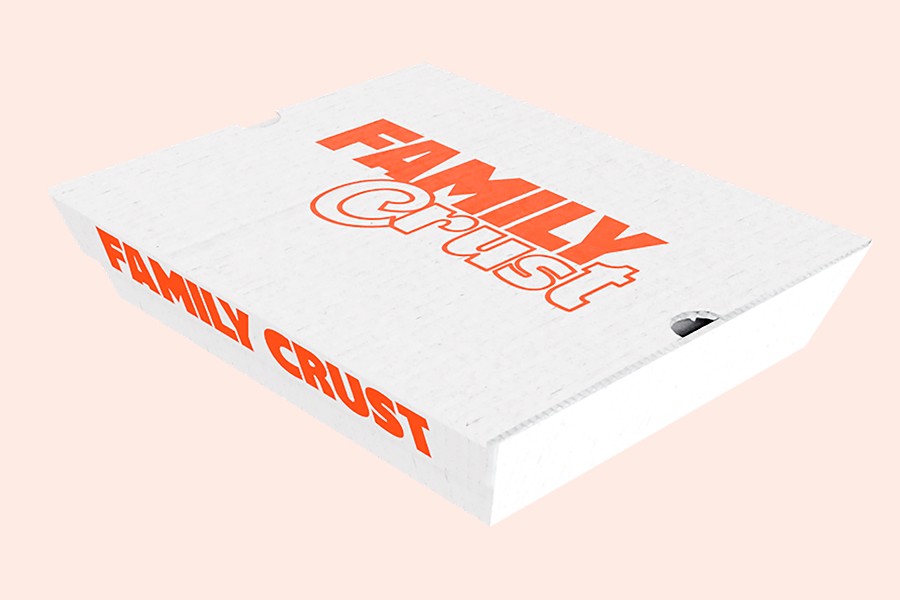
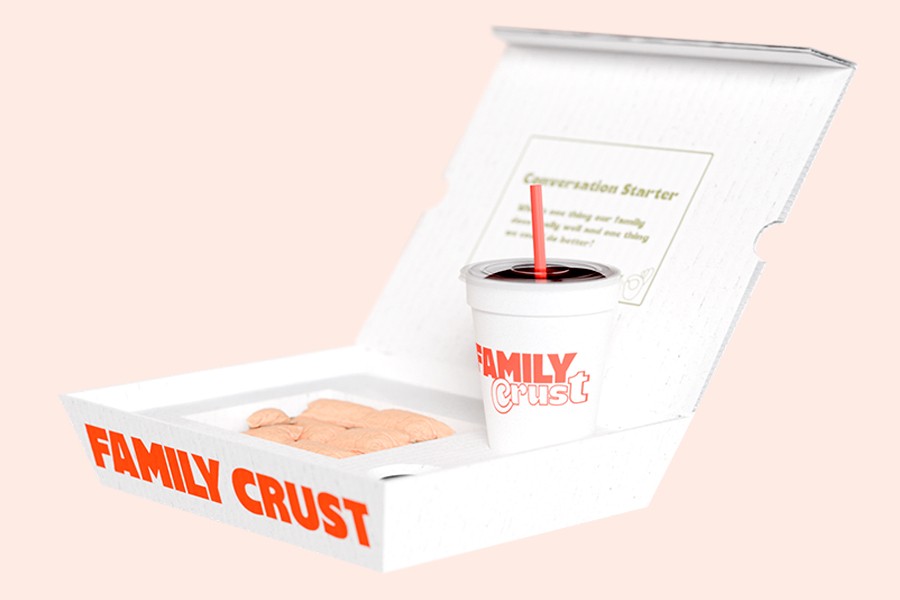
The piece I'm most proud of, though, is the collapsible Kids' Meal box. Designing packaging that's functional, kid-friendly, and brand-consistent was a fun design problem to solve and one that reinforces Family Crust's commitment to thinking through every touchpoint of the family experience, not just the app.
Summary
Family Crust centers on reimagining the pizza ordering experience specifically for busy families. The core problem identified through research including competitive audits, parent interviews, stakeholder conversations with originator Judd Alsup, and surveys is that existing pizza ordering systems are built for transactional speed rather than family dynamics. Parents, particularly mothers between 25–40, are navigating chaotic weeknight schedules, juggling multiple children's preferences, budget constraints, and time pressure, all while existing apps force them to rebuild orders from scratch every time. The opportunity uncovered was to design a system that doesn't just feed families faster, but actively reduces cognitive load and helps reclaim pizza night as a moment of genuine connection rather than a logistical headache.
A custom mobile ordering app was the design solution and was built around three key insights: families need a system that remembers them, pre-built bundles act as decision shortcuts, and curbside pickup consistently outperformed delivery and drive-thru in desirability. The resulting product features Family Profiles for near-zero-friction repeat ordering, curated family bundles, a subscription model for planned weekly dinners, and a curbside-first fulfillment experience. Usability testing validated the core approach, with the Quick Order and Family Profiles flows achieving a 100% task success rate and earning feedback that the experience felt fast and intuitive. The subscription flow required iteration to lead with transparent pricing and clear value before asking for commitment, which was refined in the high-fidelity prototype. Ultimately, the project demonstrates that with intentional design across both the digital ordering journey and the physical dining experience, pizza night can shift from a reactive necessity into a reliable family ritual.